Affichage des articles dont le libellé est Verbs. Afficher tous les articles

lundi 11 février 2013

Random

I can't find a unifying theme to this week's vocabulary - hence the title of this post.

enseigner = to teach
l'enseignment = teaching/teachings
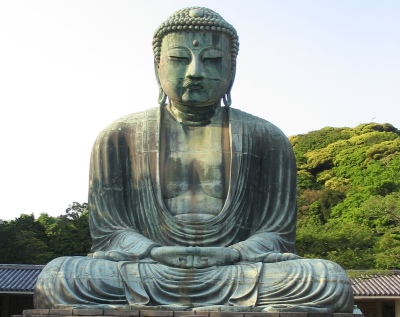
l'enseignement du Bouddha 

étudier                 } to study
faire des études    }
suivre un cours     = follow a course
le cours                = lesson / course
les cours               = lessons / courses
la leçon                = lesson

suivre = to follow (irregular verb)
je      suis     nous suivons
tu      suis     vous suivez
il       suit     ils suivent
elle   suit     elles suivent


faire du babysitting = to babysit
garder les enfants   =  to look after the children


une école maternelle  = nursery school

prendre         = to take something (somewhere)
emmener      =  to take someone (somewhere)

e.g. Linda emmene son petit-fils à l'école maternelle
       Elle prend son livre au cours de bouddhisme


avoir l'air = to seem (click on link to see a previous post)


 un pourboire = tip


lundi 28 janvier 2013

Enough!

This post contains some of the vocabulary we encountered during the last two lessons:

J'en ai marre (coloquial)              } I'm fed up / I've had enough  
J'en ai assez                                }

J'en peux plus (je n'en peux plus) = I can't take anymore


un poisson rouge = goldfish


animals,fishbowls,goldfish,household,nature,pets,water,aquatic
 un poisson rouge

By the way, have you heard the one about the Catholic goldfish who went to midnight mass? (Private joke - you had to be at last Thursday's lesson to appreciate that one).

les oeufs brouillés = scrambled eggs

les oeufs brouillés

triste = sad

triste

Ago
six years ago           =  il y a six ans 
one week ago        =  il y a une semaine
three months ago  =  il y a trois mois

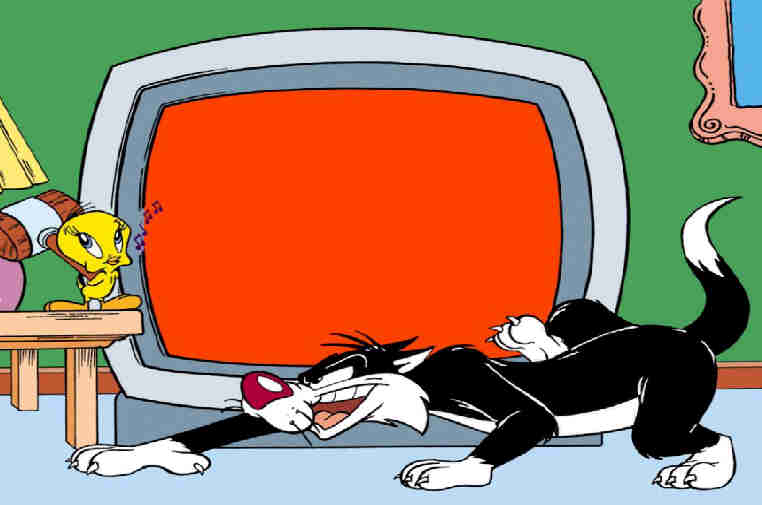
s'approcher de = to approach / come nearer

le chat s'approche de l'oiseau

parce que   =  because
à cause de  = because of
accidents,auto accidents,automobiles,autos,broken,car wreck,cars,collisions,crashes,nature,plants,transportation,trees,vehicles,wrecks


e.g.         Je suis en retard parce que j'ai eu un accident de voiture.
               Je suis en retard à cause d'un accident de voiture.


And finally ......

manquer = to miss. Check out a previous post for a full explanation.  


dimanche 25 novembre 2012

Reflexive Verbs

reflexive verb = un verbe pronominal (plural = pronominaux)

This lesson we (briefly) revised the present tense of reflexive verbs (les verbes pronominaux). These verbs take an extra pronoun so the infinitive always begins with 'se', e.g. se réveiller, se laver etc.  Let's look at se laver as our model verb.

se laver  = to get washed (literally to wash oneself)

je         me     lave     = I get washed (literally, I wash myself)         
tu         te      laves    = You get washed (you wash yourself)   
il          se      lave        etc   
elle      se       lave
nous     nous   lavons
vous     vous   lavez
ils         se      lavent
elles     se      lavent

View details
Elle se lave

However, if you wash something else the verb is not reflexive, e.g
automobiles,autos,boys,car washes,cars,men,persons,transportation,washing cars
Je lave la voiture.

Similarly, to go for a walk is se promener, so you would say,

household,people,raining,umbrellas,walking,weather,monsoons,rain coats,protection,seasons
Il se promène sous la pluie

but if you are walking the dog then it's just promener.
Ils promènent le chien

You can therefore, make a verb reflexive. So for example, téléphoner à is to ring (telephone) someone.

Il téléphone à David Cameron peut-être?

but to ring each other is se téléphoner

Ils se téléphonent

Here are two reflexive verbs which came up in conversation on Thursday:

se fàcher = to get angry and se disputer = to argue

Nous nous disputons

 angry,computer crashes,computer problems,computers,emotions,mallets,men,metaphors,PCs,persons,system errors,technology
Il se fâche


To revise reflexive verbs, go to Façon de Parler, chapter 18, page 263. 

Les Devoirs
Voilà, Unité 2, page 28.  Activités 1, 2 et À Vous
Page 29, Activité 3


dimanche 4 novembre 2012

La Toussaint

Our lesson took place on 1 November, All Saints Day or La Toussaint.

Le 1er novembre, le jour de la Toussaint est un jour férié en France.
L
Les français déposent des fleurs (normalement, les chrysanthèmes) sur les tombes de leurs proches 


un jour férié = public holiday
leurs proches = their relatives (literally, their nearest)


Last lesson's vocab 
avoir l'air = to seem / to appear. We have, in fact, done this before (honest!).  Go to, http://www.blogger.com/blogger.g?blogID=6399474809859798061#editor/target=post;postID=8626768233733991434

What to say when someone sneezes......
.... À tes souhaits!
or to someone you know less well - À vos souhaits!

What Linda does, when she thinks the teacher's not listening......
chuchoter = to whisper (reg ER verb)

Voici une image qui est incroyable.....
......mais vrai! 


incroyable = incredible / unbelievable

L'ouragan Sandy à New York

l'ouragan = hurricane


vendredi 19 octobre 2012

AVOIR - encore

Just a short post this week as, owing to the 'lurgy', the class was somewhat depleted. So, just two more avoir expressions:

avoir honte       =  to be embarrassed
avoir besoin de  =  to need (literally, to have need of)

[embarrass]
J'ai honte


On a besoin d'un nouveau pneu 

un pneu = tyre

mardi 19 juin 2012

Avoir

Last lesson, we revised expressions with avoir (to have). Those, where in English, we would use the verb 'to be'. 

avoir froid                =    to be (feel) cold                         
avoir chaud             =     to be (feel) hot         
avoir faim                =    to be hungry            
avoir soif                  =    to be thirsty           
avoir raison              =    to be right
avoir tort                 =    to be wrong
avoir peur                =    to be frightened
avoir de la chance    =    to be lucky
avoir sommeil           =   to be (feel) sleepy
avoir ____ ans           =   to be ____ years old


                    J'ai froid                                                            J'ai chaud 


             Ils ont faim

Ils ont soif


     5 + 5 = 10  ü  5 + 5 = 9  X  

            Vous avez raison                                                 Vous avez tort 


                 Nous avons peur!                        


Il a de la chance!


                                                        Tu as sommeil?

Il a vingt-deux ans

These expressions can be found in Unité 6 of Façon de Parler, pages 72, 73 & 79.

And this concludes the blog posts for this academic year, as there are no more lessons until September.

Bye bye everybody, bye bye!

lundi 30 janvier 2012

A Kiss Is Not A Kiss....

Last lesson we came across the word 'baiser', which literally means 'to kiss' but can also mean 'to f**k', so best to avoid it I say.

'faire la bise' or 'donner une bise' both mean 'to kiss' (the kiss on both cheeks, which is the usual French greeting among family, friends and close colleagues). 

You can also use 'embrasser', which means to kiss (usually in a more intimate sense like the picture above).

The French don't really do hugs as a greeting, so there is no real translation of 'hug'.  The closest is 'un calin' (faire un calin), which means cuddle (give a cuddle), so implies something a bit more intimate.  

Click on the link to explore this cultural minefield further. 

There is also an interesting thread here.  Go straight to the 7th July 2009 post by lorenzogranada.

By the way, do you recognise the picture? It is by Robert Doisneau, a famous French photographer and is called  'Le baiser de l'Hôtel de ville'. 

Reminder
Next lesson, Thursday 2nd February, is chez Malcolm.
Grosses Bises,
Evelyn